Monday, 14 February 2011

A history of Valentine's Day

Even when single, I've never really minded Valentine's Day that much (I quite enjoy it in fact - you get all sorts of two-for-one deals on love hearts, and they are the best sweet ever) and that is mostly for one main reason: the original Valentine's Feast Day was to celebrate the Valentines (there were at least three) who were early Christians murdered for their beliefs by the Romans, which is possibly the least romantic thing I've ever heard. So anyone who tries to tell you some myth about how Valentine was a spurned lover who wrote a card to the daughter of the jailer who was imprisoning him for...something (I don't know, these myths aren't always very well written...) and this signifies the old adage that 'love conquers all, even death' and this signifies...er...something, is a liar.

Or, you know, something. One has to be a little bit bitter, after all. Keeping up appearances, and everything.

Anyway, despite these rather gruesome beginnings, St. Valentine's Day did eventually become associated with romantic love in the 14th century, when Geoffrey Chaucer wrote a poem commemorating the engagement of King Richard II and Anne of Bohemia (fun fact: they got married when they were both just 15 years old). A century later, in 1415, the first Valentine's card was sent, by Charles, duc d'Orleans, to his wife whilst he was imprisoned in the Tower of London. One hopes it was a good message, because he was to be kept captive for a further 24 years, and by the time he was released, his wife had died (so, naturally, he married again, as soon as he was set free). 

Cards became more and more popular in the following centuries - in the 16th, it was popular to send your lover a handmade card decorated with cupids, hearts and bows; in the 18th, one could begin to buy into the commercialized Valentine's Day, either by sending a lover one of the first printed cards or by transcribing a verse from Valentine Writers - a book of standard rhymes and greetings (how awkward would it be if you and your paramour sent each other the same poem, whilst hoping to convince each other that you were being original?); and by the 19th century, postmen were claiming a special allowance for their extra loads on the day. Also in the 19th century came the first mechanical Valentine's cards, my favourite of which had a figure that rolled it's eyes and stuck out its tongue when opened.

Today's traditional red rose first became part of the day's celebrations in 18th century France, with people imitating the love tokens given to Marie Antoinette by King Louis XVI. Coincidentally, red was also the colour their clothes became stained when their heads were chopped off by the French people in 1791.

Love hearts were invented in 1933, produced in a factory in Star Lane, in London, though they had to move out during the Blitz. They relocated to a disused mill in Darbyshire where they remain in production to this day.

Thank God. 

Thursday, 10 February 2011

Now you're just being daft

Here's another example of utter ridiculousness. I'm beginning to think that that's all this subject is. (Then I remember that my friends are doing things like Maths and Physics at university and I sort of feel a bit better. Ish).

But honestly, this is completely ridiculous. 

Today, according to wikipedia you might know, is St. Scholastica's Day (she's the patron saint of nuns, convulsive children and is invoked against storms and rain, apparently) and so, in 1335, when a riot occurred in Oxford on this day, they imaginatively called it the St. Scholastica's Day Riot. At least they thought to capitalize it...

The cause of the riot is depressingly mundane. Two young students of the university were drinking in the Swindlestock Tavern, when they decided that the ale they were drinking was not of the highest quality. Deciding, after several pints of said poor quality ale (I guess they had to check if it was all bad?), that this just would not do, they complained to the taverner. As so often happens, though, their complaints perhaps did not come across as they initially intended; words were had and things ended up with the taverner being beaten up by the two students.

Naturally, this was not an experience he enjoyed, and he decided that the only way to make up for it would be to organise a gang of locals to take on the students, which he swiftly did. He first approached the Mayor of Oxford for help, who asked the University's Chancellor to arrest the two students who had attacked the taverner. When it was made clear that this was not going to happen, a riot took place that lasted for two days and left around 30 locals and 63 students dead. This was probably going a bit far over a few drinks...

Eventually, the dispute was settled, after the King got wind of the Mayor of Oxford, John Barford riding into the countryside and calling for men to slay and smite the students, and ordered an investigation. A charter was drawn up, which stated that the Mayor and town councilors had to 'march bareheaded through the streets every year on St. Scholastica's Day and pay a penny for every scholar who was killed'. They were often pelted with makeshift weapons and jeered by the students whilst doing this, so naturally by 1825 the Mayor had gotten a bit of sick of the practice and refused to participate. After 470, no one from the university really bothered to complain, and the whole thing was dropped.

However, 600 years later, it was decided that the hatchet should finally be buried, and on 10 February 1955, the Mayor of Oxford was awarded an honorary degree by the University, and the University Chancellor was made an honorary freeman of the city.

This, naturally, made up for everything. Yes...     

Tuesday, 8 February 2011

Mary Queen of Scots[land]:

Today marks 424 years since the execution of Mary, Queen of Scots. You may be wondering why she was executed, and if you were, you'd be in luck, because I have read some books and I can now tell you why (I'm training to become a proper historian, and I believe that all I have to do is read enough books and stroke my beard thoughtfully enough and I'll be there). If you're not wondering why she was executed, you might want to stick around for the less gory bits, or perhaps go and eat a biscuit, or listen to a song that has my name in. Lovely.

Anyway, Mary, Queen of Scots. Born Mary Stuart, she was crowned Queen Mary I of Scotland at the ripe old age of six days (her father had died in battle), and in an episode which didn't really do much for stereotypes, the male courtiers in charge of the ceremony made a right mess of things, trying to get the baby to grasp a three foot sword and a scepter at the same time. Determined to ignore this rather poor start, they quickly arranged for her to become bethrothed to the French Dauphin (sadly, just a Prince and heir to the French throne, not the French Dolphin, as I initially misread, which would have been much more exciting) and packed her off to France.

There, Mary grew up, into an apparently tall and beautiful woman, who was capable of speaking French, English, Latin, Spanish, Greek and Italian. This proved a problem when the Dauphin snuffed it, and eighteen year old Mary headed back to her home country, where she couldn't understand a word her people were saying to her through their thick accents. However, this was soon to become the least of her troubles, as she was a strict Catholic, whereas most of the Scottish were ardent Presbyterians (like the Puritans, but with less general jolliness) which was to have dire consequences in years to come.

Anyway, Mary decided on returning to the country that she would like to get married again, which everyone thought was a splendid idea until they saw her choice of husband - the deeply unpopular sort-of contender for the throne Lord Darnley. Within two years, however, Darnley had managed to become equally unpopular with Mary herself, when he burst into her bedchamber with 20 men and murdered her private secretary in front of her, whilst she was heavily pregnant.

By this point, Mary decided that they were a bit beyond Couples Counseling, and arranged for her new lover to strangle then blow up her second husband, marrying him shortly after. This, ultimately, led to her undoing. There has never been any solid proof that Mary arranged or had any part in Darnley's murder, but there was enough implication there for her marriage to the supposed murderer to disgrace her enough that she had to abdicate and flee south into England and the arms of her cousin, Elizabeth I. 

Mary had thought that Elizabeth would support her in a sort of "we Queens had better stick together, eh?" way, but she was to be sorely disappointed. England and Scotland had been enemies for too long for the Queen of England to suddenly forget all their previous history together and help her cousin, and besides - she was a Catholic. This was quite a headache for Elizabeth. Keeping Mary in the country would make her a very visible rallying point for Catholic assassination plots - here was a ready made Queen just waiting to be stuck on the throne! - but deporting her meant that she would probably use the opportunity to muster an army and invade England. Executing her was not an option initially, as Elizabeth, whose own mother had been killed by her father, was very opposed to the ideas of both regicide and killing a cousin.

Therefore, she did what politicians have done for centuries since, and launched an inquiry. After much faffing and paper pushing, it was concluded that Mary should be kept captive in various different castles around the country. At first, probably at Elizabeth's assistance, her captivity was a fairly enjoyable experience - she was provided with plenty of clothes and comfortable furnishings, daily meals and was even allowed a few servants and ladies in waiting. The English queen's assistants, however, were not happy with this. Aware of the huge wars between Catholics and Protestants that were occurring on the continent, they believed that the only way to be rid of the 'threat' of the Scottish queen was to have her executed on some trumped up charges.

Elizabeth deliberated, for nineteen whole years. Eventually, "evidence" was found that strongly suggested Mary was plotting with other Catholics to have Elizabeth assassinated and replace her on the throne, and Elizabeth had no choice but to have her put to death. Many historians these days believe that much if not all of the evidence was fabricated, but at the time it was deemed substantial enough that Mary was put on trial, convicted of treason, and set to be executed. 

The execution did not go to plan. It took two or three blows for the axeman to completely sever her head; when he finally managed it and held it up by her hair, it dropped out of his grasp and rolled away, as what he was really gripping hold of was a wig, and after all that had taken place, the watching crowds were horrified, then presumably very relieved when her dress started whimpering and moving, and a small lapdog ran out of the clothing. Lovely.

It was not, it has been noted, a very dignified affair.    

Monday, 31 January 2011

Juxtaposition

I'd like to take a break from identifying cell organelles (yeah!...) to talk about the marvelously ironic country that is the United States of America. Flipping through the Wikipedia article on 31 January, you will discover that, on this day in 1865, the "United States Congress passes the Thirteenth Amendment to the Constitution of the United States, abolishing slavery", yet on this day in 1876, a mere eleven years later, the country "orders all Native Americans to move into reservations". Huh.

America is a very interesting country. It's only been officially independent since 1776, yet in that relatively short time, it has risen to become the world's greatest superpower. (You could argue for days, I am sure, as to whether this is a title it retains, but it is very true to say that it was the dominant world power for almost all of the twentieth century.) A melting pot of many, many different races and religions, and containing immigrants who often arrived incredibly poor, America in the eighteenth and nineteenth centuries had the potential to completely fail as a democracy, simply because of its diversity. From some countries, you had Catholics escaping persecution, other countries, Protestants and others still Jewish (and that's just counting the major European religions), yet these incredibly different groups of people managed to exist side by side once they were in America.

The sheer size of the country probably had something to do with this. There was enough room, if you so required, to pack up and move thousands of miles away from the people who were annoying you, and still be assured of land and space to call your own when you arrived there, unlike in the highly overcrowded European nations. Often, new states sprung up where people of the same religion congregated - Pennsylvania, for example, was founded (first as a colony, then later as a state) by William Penn, a very prominent Quaker leader, and the religion dominated the state's governance for decades; Utah was founded by Brigham Young, a leading Mormon and has retained that connection to the Mormon religion to this day.

Though there were instances of segregation such as these, there are other examples of many different nationalities and creeds living side by side. New York, for example, had a very diverse population simply because it was home to the largest immigration center in the country; California after 1848 had an equally diverse population because of the myriad prospectors arriving from all over the world hoping to try their luck in the gold rush.

This is not to say that the US was not without its problems. Slavery was not formally banned in the country until 1865, whereas most European countries had banned it much earlier in the century (Britain, for example had banned in 1833). Even after this point, treatment of black people, particularly in the Southern states, was often terrible - the so-called 'Jim Crow' laws continued right into the twentieth century, and the Civil Rights Movement was still (understandably) very active until over a century later, when ethnic minorities were finally granted equal rights.

Their treatment of the Native Americans was equally despicable - the forcible moving to reservations of the peoples was just the beginning of the end, with many "savages" having been treated as second class citizens since Europeans had first started coming over to the country. 

Women and other ethnic minorities were also often treated poorly, though in some cases, this was not much different to the rest of the world. Irish and Chinese immigrants were often little better than slaves, as they worked in highly dangerous occupations such as mining or building railways for an incredibly small wage, and no rights to protest, but, sadly, this was pretty much the same as the rest of the world. Though some states allowed women to vote in the late nineteenth century, the Nineteenth Amendment to the Constitution (which allowed universal women's suffrage) was passed in 1919, very comparable to most European countries. 

Obviously, the country was not perfect at all, particularly in their treatment of ethnic minorities, but it is truly remarkable that it was able to become such a dominant world power in so little time. They have often been held up as a bastion of democracy, and though clearly there are examples which can be found that illustrate that this was most definitely not true, there are plenty more examples to show that it is. Not for nothing do we still hold true the idea of the "American dream" - that a penniless man could come to the country, escape the rigid class systems of Europe, and make himself a millionaire. Naturally, these situations were very rare, but they did occasionally happen. Social class was much more fluid in eighteenth, nineteenth and early twentieth century  America than it was anywhere else.

It will be interesting to observe what direction the United States takes over the next few decades. Once a model of democracy, the right-wing Tea Partiers, such as Sarah Palin seem to be having more and more influence on life there - the recent shooting of Congresswoman Gabrielle Giffords and the other innocent victims is directly attributable to the violent rhetoric that is more and more forthcoming from certain political leaders; and the new Republican congress wants to restrict abortion still further, even going as far as redefining rape (you can be 'forcibly raped' or 'not really raped it was just a bit of harmless fun and who says a woman should be conscious during sex anyway') as if women who have been attacked haven't been through enough. Ironically, we may see, in a few decades time, the Middle Eastern countries that the US has been determined to invade in order to bring democracy to, actually being more democratic and allowing women more rights than America itself.

But who knows? I am a historian, not a fortune teller, after all.     

Saturday, 29 January 2011

25 Presidents in Rhyming Couplets

A Dreadful Poem Commemorating the Achievements of the First 25 Presidents of the United States
because today is Number 25's birthday. 
American presidents number forty four,
with George Washington the first to take the floor.
(Though he didn't live in the White House
because it hadn't been built yet).

John Adams is next, a bit of a bore,
his main achievement: an undeclared war.
(It was against France - the 'Quasi War'
and basically nothing happened in it.)

Next up was Tom Jefferson, who went down a storm,
always on tip-top intellectual form.
(He wrote the Declaration of Independence
and was a polymath - Greek for "bloody clever".)

James Madison, the Bill of Rights' author
comes in as President number four[ther..]
(Look, rhyming isn't my strong point, okay?
You try finding a rhyme for 'leader of the House of Representatives'...)

James Monroe wrote his own famous doctrine
instructing Europeans to "keep out, the swine!"
(Though as I wrote earlier, he didn't exactly have an army to back him up
so it was a miracle they did, really...)

John Adams' son, John Quincy, was five
well - they had to keep the family name alive!
(The Quincys were a political dynasty
which means they get cities in Massachusetts named after them, and stuff...)

Andrew Jackson's next - and what a meanie!
The things he did to the natives were quite unseemly.
(If you want to know more, check out this book
it's really good, but quite depressing, so ready your tissues...)

Martin Van Buren isn't really known for much,
though was the first President whose parents were Dutch.
(He also is thought to have popularized 'OK'
though when he used it, it was to describe where he came from - Old Kinderhook.)

President Harrison lasted but thirty two days,
dying of the flu, that terrible malaise.
(His death sparked a bit of a consitutional crisis because no one knew what to do
but obviously they sorted it out because the US is still running...)

Successor John Tyler was very unpopular when
he ignored his party's principles as President ten.
(They later excluded him from the party, and most of his cabinet resigned
but it was a bit late by then.)

Polk increased the land mass by twenty percent
but only secured one term as President.
(He won most of what is today California, Arizona and New Mexico
in the peace treaty at the end of the Mexican-American War.)

President twelve, Zach Taylor, was the last Whig
but ate poisoned cherries, thus ending his gig.
(Which was quite unlucky really,
he escaped death as a soldier in many wars, and then...that?!)

The VP took over - Mr. Millard Fillmore
who opposed allowing slavery in territories gained in war.
(Which made him very unpopular in the South
where rumblings of the Civil War were already starting.)

Franklin Pierce, number fourteen, was loved at first,
then became considered one of the worst.
(Though most contemporary historians agree that he was just out of his depth
with the US descending further and further into war and chaos.)

James Buchanan did not have a wife
and his Presidency was marred by strife.
(Not that, you know, I'm suggesting those facts are related
I just couldn't find a rhyme for Buchanan...)

Lincoln delivered the Emancipation Proclamation 
which some say caused his assassination.
(Everyone talks about his being the most loved leader of the US
which is clearly a posthumous accolade because he was so loved at the time that someone shot him...)

 Andrew Johnson led the country through post-war reconstruction
but ultimately, this led to his own destruction.
(He'd been a military man during the war and wasn't really cut out for politics,
ending up the first President to be impeached.)

President Grant had been a military hero
but when he left office, his popularity was zero.
(This was mainly due to lots of scandals when he was leader
and severe economic depressions, which always tend to be a bit of a bummer.)

Nineteenth on the list is Rutherford Hayes,
a President known for his liberal ways.
(He spent one term encouraging and laying the groundwork for meritocratic government
then stepped down and spent his life promoting educational reform. Nice chap.)

James Garfield's Presidency was also cut short,
and his killer was dealt with by the Supreme Court. 
(He wasn't killed by the bullet of his assassin, but the infection that developed afterwards.
He was moved to the sea, in the hope it would aid his recovery, where locals laid a train track for him to get there in a matter of hours!)

The VP, Chester Arthur, took over, as was the norm
soon becoming "the Father of Civil Service reform".
(Which, you know, I'm sure was a very good thing,
but it isn't really very exciting, is it?)

Grover Cleveland became President Twenty-Two
the only one to serve non-consecutively, too.
(Bugger, this means I have to come up with more rhymes
which is a challenge, when he didn't really do much. What rhymes with 'boring'?)

The Twenty-Third President was Benjamin Harrison
who admitted six states into the Union.
(North & South Dakota, Montana, Washington, Idaho and Wyoming
if you were interested.)

Now we're back to President Grover Cleveland
Whose second term wasn't really all that grand
(It was full of economic panics and depressions,
which ruined the Democratic Party and led to Republican landslides.)

The final President for us to see
was the last of the nineteenth century - William McKinley
(about whom I know two facts:
today was his birthday, and the high school in Glee is named after him.)
  

Friday, 28 January 2011

Proud & Prejudiced: Female writers in the early nineteenth century

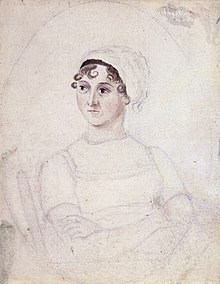
For Christmas, my lovely friend Christina got me a copy of the novel Pride and Prejudice, by Jane Austen. I've never read it, nor indeed any other of Austen's works, and I haven't seen any of the film or TV adaptations of it either, but the copy she bought me is an absolutely beautiful book (look! It has swans on! Or at least, I think they're swans... And it's gold! What's not to love?!) and Christina insisted that I simply had to read it because it would revolutionize the way I looked at love and I figured that since so so many people rave on about it, it can't be all that bad, so I'm reading it. And it is pretty interesting. 

It's not the first thing I would have picked up in a bookshop, so I'm glad it was given to me because there isn't much chance I'd have read it otherwise, and it's actually quite good. For something that was written at the beginning of the nineteenth century, it's still very readable, and the love story itself (yeah, I'm yet to finish it, but I'm pretty sure of exactly who is going to end up betrothed to whom...) is a fairly timeless one.

By which I mean to say, 'Thank you very much for this gift Christina, I'm actually enjoying it'. But I'm not an English student thank God not that they aren't completely lovely people; I just loathe most poetry and I have no idea how to analyse a text, so I couldn't tell you about the writing styles and the hidden metaphors and whatever else it is that write-y people bang on about. Not that you would want to read my analysis of a half-read book anyway. No, I'd much rather talk about the book's author, Jane Austen herself, as today in 1813 was the day the book I've been rambling on about was first published.

There are books and website a-plenty out there about her, so I'm not going to waste time filling you in on facts about her birth, death or daily life - instead, I'm going to attempt to put her writing into context: how, as a woman in the early nineteenth century, did you get published?

With great difficulty, it appears. Pride and Prejudice was not Austen's first published novel, and had in fact been a work in progress for many years prior to it's publishing, but when it finally went to print in 1813, it did so anonymously and only after Austen's brother, Henry, had persuaded Thomas Egerton to publish the novel. Her books, once published, remained steady sellers; they were often reviewed favourably and were fashionable amongst the elite aristocracy of the early nineteenth century, but despite this success, Austen was not persuaded to 'come out' as the author of the books, and when she died, in 1817, her achievements as a writer were not mentioned at her funeral, though the 'extraordinary endowments' of her mind were.

Austen was not the only female author in the nineteenth century and beyond to hide behind a veil. Mary Shelley, author of Frankenstein, which was first published a year after Austen's death in 1818, had the first few editions of her book published anonymously; Charlotte Bronte wrote under two pen names - Lord Charles Albert Florian Wellesley and Currer Bell,  the name which appears on early versions of her most famous novel, Jane Eyre. 

It wasn't until much later in the nineteenth century that authors such as Louisa May Alcott were able to print under their own names as men were - Little Women was published in 1868. Though Alcott herself was a passionate advocate of women's suffrage - she was the first woman to register to vote in the state of Massachusetts - there are some schools of thought which say that she was only published because her novels were deemed 'mere' women's books. Her semi-autobiographical stories were seen as fairly trivial, and not radical enough to be threatening to most men, who in the nineteenth century, and beyond had a firm idea of where women 'belonged' - and it was not in the publishing house. 

Clearly, this is not something I agree with at all, but I can at least understand where most of these men were coming from. They had been brought up in an incredibly patriarchal society, which firmly believed that women should not be involved in business of any description - some even believed that educating women beyond the basic skills needed to write letters or perhaps speak a little French was too much. They were a product of the society they had been brought up in; it took a World War and the womens' suffrage movements of the late nineteenth and early twentieth centuries to show them how wrong they had been in their ideas, and fortunately for us today, there would be no need for a female author to publish anonymously or under a male pseudonym, because we no longer live in such a sexist society.

Except, a few years ago, around the turn of the millennium, I remember listening to a radio interview with a female author, who was asked why she had used a pseudonym (of sorts) to publish her (very well selling, and well written) books under. The author replied that she had been advised that publishing her stories, which had been written to appeal to neither boys nor girls specifically, under her obviously female name might turn boys off reading the books - young boys wouldn't want to been seen reading a book written by an (eurgh!) GIRL. Her publishing house advised her that she should at least attempt to make her name less obviously feminine, in order to appeal to a male fanbase. 

So she did, choosing to publish using her first initials and surname - 'J' and 'K' and 'Rowling'. It's such a remarkably progressive society we live in.     

Thursday, 20 January 2011

15 Reasons Why Wars Are Utterly Stupid & Daft:

15 Reasons Why Wars Are Utterly Stupid & Daft:

A list which came about because I am in the middle of revising for my final exam on the history of warfare, a topic I loathe, and the only interesting facts I manage to find about the battles are ones that are far to trivial to write about in an essay
and
because I like lists a lot. 
1) Shoes are important:
The Battle of Gettysburg, in 1863, remains the largest battle ever to have been fought on American soil. Ever. And do you know why it came about? Confederate General Robert E. Lee's army had no shoes, and when they found themselves outside the small Pennsylvanian town of Gettysburg, they thought to themselves, 'Oh hey guys, these Northerners have lots of shoes! Let's go raid the town for them!'. So they did. Where they happened to bump into the massive Union army, and realized that they'd better start fighting. The Confederates lost the battle, sadly, so I don't think they got any shoes at the end of it all. Sadface.

2) No really, they are: 
My friend Phil told me this story: during the Crimean War, the British were hopelessly disorganised, and decided to send all the left boots down to the Crimea on one ship, and all the right ones on another. And one of the ships sank. You couldn't make it up...

3) Actually, the whole of the Crimean War was a bit of a farce: 
I feel a bit bad making fun of the Charge of the Light Brigade, because so many people died, which is obviously a horrible thing, and would've been devastating for their families and everything, but the whole thing was completely preventable. British cavalry were given the order to charge up the 'Valley of Death', waving their swords about, whilst the Russians blasted them to pieces with cannons on all sides, thinking the British must be drunk.

4) To be honest, most nineteenth century wars were totally ridiculous:
Take the Franco-Austrian War of 1859, for example. It's a fairly insignificant one, in the grand scheme of things, but one thing it is famous for is the fact that the French had the bright idea to utilize the new railways to get their troops to the battlefield fresh and ready to fight, whereas the Austrians went on a two week march to get there. Anyway, the Austrians eventually cottoned on to this train business, and sent their reserve force to the next battle this way. Except they got off at the wrong station and completely missed the battle. Really.

5) And if they weren't missing battles, they were being inadequately prepared:
So a few years later, in 1870, the French were fighting the Prussians, and they had this amazing new weapon, called the matrielleuse. It was a forerunner to the machine gun, so if you were into slaughtering innocent soldiers, it should totally have been your weapon of choice. The Prussians should have been completely wiped out, but they weren't, because the French soldiers hadn't been trained in how to use their new gun, so it was effectively completely pointless.
 
6) Still, at least the French actually had an army:
After Charles II was restored to the throne, Parliament wanted to control his actions as they were afraid he'd do what his father had done, and plunge the country into Civil War again. Their solution, therefore, was to pay for and control the Navy, whilst allowing Charles an army only if he promised to pay for it himself. (Which, y'know, doesn't seem like the brightest move ever - 'Of course you can have an army! Just as long as you're in total control of it, not us! That'll ensure you won't try to attack us or anything...') In the end, Charles didn't attack the MPs (he was too busy partying and being a closet Catholic, two things which totally go together...) but for many years, the English army wasn't officially recognised as such, and the country at least technically had no army. 

7) However rubbish and unofficial the English army was, at least it wasn't full of sheep:
So the Civil Wars themselves were very complex, and their origins even more so, but one of the reasons they occurred was because Charles I needed money from Parliament for a war he was fighting in Scotland - the Bishops' War. In this war, England and Scotland were fighting over Bibles (as you do...), but the English army was much larger than the Scottish one, so the Scottish generals found themselves in a bit of a quandary. They decided that if they could trick the English into thinking their army was much larger than it was, they might be unwilling to fight them - and this plan turned out to be a good one. They did indeed manage to trick the English, by padding out their ranks with sheep, whom the English thought were...particularly woolly soldiers? God knows how this one worked...

8) Mind you, at least they weren't being paid in wool:
During the 100 Years' War, coinage was in short supply, so the English soldiers were paid in sacks of wool. Because all a fighting bloke really wants to do is learn to knit...

9) And about that '100' Years' War business:
Yeah, it actually lasted 116 years. But looking on the bright side, standards in numeracy had improved immeasurably by the time the Seven Years' War rolled round, and that ended bang on time, in 1763.

10) Also, at least numeric names make sense:
100 Years' War, 30 Years' War, Seven Years' War - they're all fairly logical, no? War of 1812 - that's another fairly self-explanatory one. The War of Jenkins' Ear...yeah, perhaps not. Though thinking about it, it started because Captain Jenkins had his Ear cut off by Spanish coast guards, so the name isn't that daft, even if the war itself was...

11) If you thought the names of wars were daft, wait until you hear what's going on on the battlefield:
So there's a very famous miscommunication about the First World War, where some field commander or another sent a message via telegram saying, "We're going to war, send reinforcements" but this got mistranslated and ended up as "We're going to a ball, send three and fourpence", and I can kind of see how this happened but honestly, didn't anyone think to check if this was the right message, coming from, y'know, a battlefield. War does this to people...  

12) Sometimes, people switch sides in the middle of conflicts:
Have you ever watched a children's cartoon and seen one of those montages where the good guys chase the monster through a door, then you see them turning around with the monster chasing them, then next thing you know, they're chasing the monster again, and no one knows what's going on? You have? Good. Visualize that happening in real life, 'cause it did: in 1460, the Earl of Warwick invaded (I'm assuming from some far distant land, and not, y'know, the well known island of Warwickshire...) captured Henry VI and installed Edward IV on the throne. Ten years later, in 1470, Warwick invaded again (oh who knows, maybe the Midlands were suffering from a lot of flooding around that time...), this time reinstalling Henry VI. You couldn't make it up...


13) We didn't get much better in World War Two either:
So Dunkirk was this terribly disorganised thing, where a load of British soldiers were trapped on a beach in Normandy with German soldiers advancing towards them and readying their planes to fly over and drop bombs on them, so the government requisitioned every ship on the south coast, even little two or three man fisher-boats to go out and rescue them, and they managed it, securing the rescue of the soldiers trapped on the beaches. In fact, everyone was so elated by the events that Winston Churchill had to make a special radio broadcast reminding the country that this wasn't actually a victory - in fact, it was a pretty awful defeat.


14)Anyway, sometimes you don't even need to fight, you can just employ a terrible euphemism plonk your warship in someone else's harbour:
As the British did when the Portuguese threatened to renege on their promise to grant independence to Brazil. No shots were fired and no fighting happened, but a stern warning was issued, and the best ship in the Navy set sail for Lisbon just to reinforce the point.

15) And sometimes, you just need to sound convincing:
In 1823, President James Monroe issued the Monroe Doctrine to the rest of the world, which basically said "Hey you guys? Yeah, don't attack us, 'cause we'll so get you back worse". Well, I'm not sure he said it quite like that, but that was definitely the general gist of things. Anyway, Spain and Portugal, who had both been planning to continue or restart old wars, backed down completely upon hearing this. Even though, at the time, the US had no navy and a very poxy little army. So really, all you need to do is sound threatening enough!

Oh my God. Am I condoning bullying?! Oh dear...